
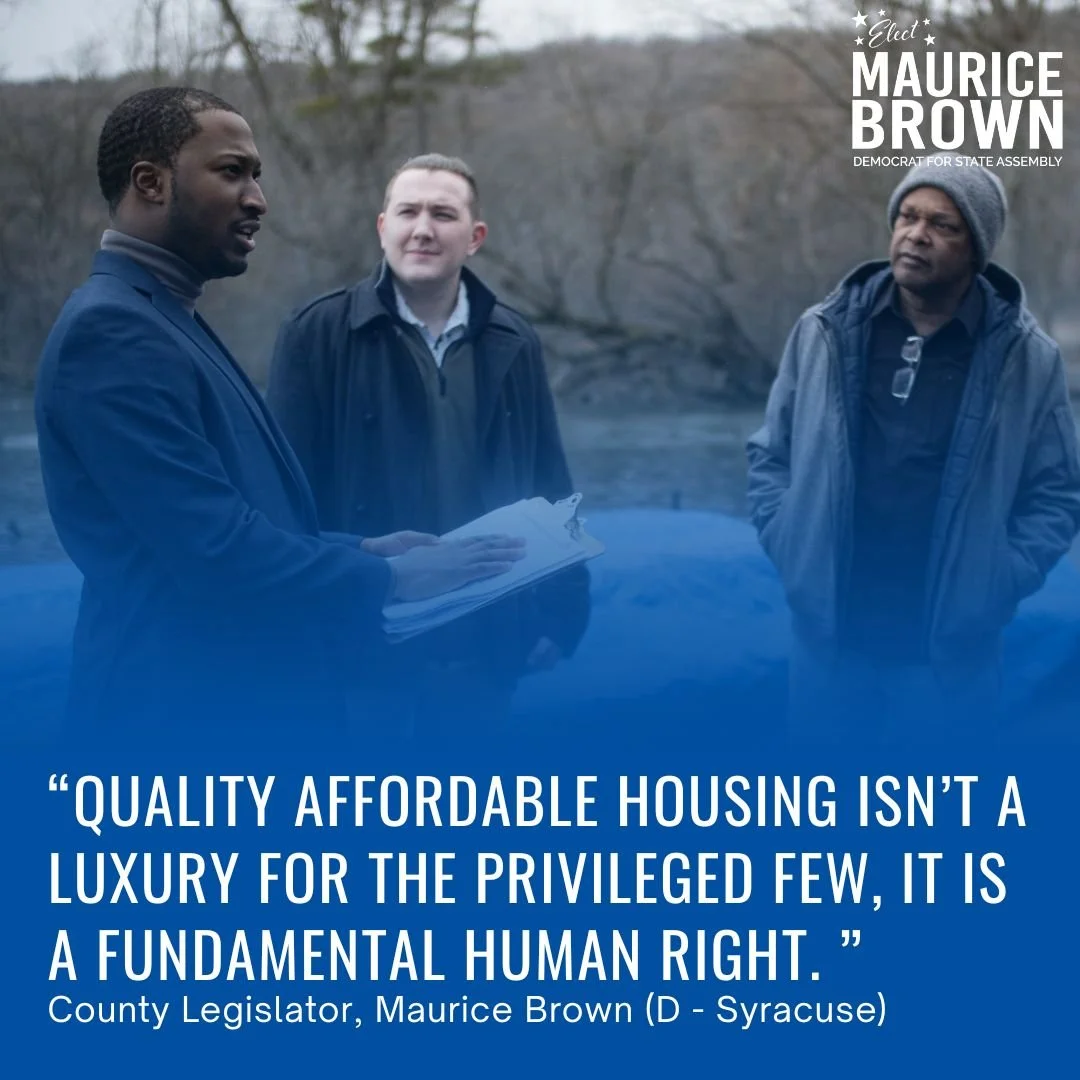
Quality Affordable Housing Is a Human Right.
Here Is My Vision Towards Fixing the Crisis
March 10th 2026
At a fundamental level, I believe everyone deserves a safe, stable place to live. That belief shapes how I think about housing policy and what role government should play in addressing the housing crisis. Personally, I am much closer to the belief that housing should not be a profit driven commodity at all than the idea that it should exist exclusively for profit. Housing is too central to people’s lives to be treated purely as an investment vehicle.
There are places implementing models that reflect this philosophy. In places like Atlanta, GA and Montgomery County, Maryland, the government acts as a public developer that builds housing directly. That approach reduces the profit pressure that often drives up costs and slows construction.
Now, I recognize that we do not currently live in a equitable system built exclusively for public benefit. We have to work within the system we have while we push toward the system we ultimately want. But if we are serious about solving the housing crisis, government must play a larger role than it currently does.
I am writing this not to be viewed as a “platform to be enacted” but as an explainer of my housing philosophy, and the kind of policy I want to see government pursue. I’ve included plenty of links so that you can see some of the research and articles that have influenced me.
Before we talk deeply about solutions, we need to be honest about the problem.
The Problem: We Have Not Built Enough Housing
At its core, the housing crisis in Syracuse is a basic supply and demand issue.
For years, housing construction has lagged behind population needs while much of our existing housing stock has aged and deteriorated. The result is simple: there are not enough homes available for the people who need them. If we want to bring housing costs down and stabilize neighborhoods, we need to increase supply.
That means two things. First, we need to preserve the housing we already have by repairing and restoring deteriorating homes. Second, we need to build more housing overall.
Homeownership should absolutely remain part of the American dream., but it is important to recognize that not everyone wants to own a home. Many people would rather live in walkable neighborhoods where they can easily reach grocery stores, jobs, parks, and public transit. As we create new housing, we should prioritize development that is dense, transit oriented, and designed to support a wide range of families and lifestyles.
Addressing this crisis requires action at multiple levels of government.
Solutions: What Onondaga County Can Do
Although I’m running for state office, I know the county plays a big role in addressing housing. It’s why I’m supporting Tammy Honeywell and Jo Bennett, two candidates who will treat housing like the human right I believe it to be. At the county level, one of the most powerful tools we already have is the Greater Syracuse Land Bank.
The land bank has done important work acquiring distressed properties and returning them to productive use. Under the current model, the land bank assesses the properties and sells them to buyers at low cost, provided those buyers can demonstrate they have the resources to rehabilitate them. I support that model and it has worked in many cases. But I believe we can go further.
In October of 2024, I called for an Aquarium-Sized investment into housing for the 2025 Onondaga County Budget.
Right now the land bank essentially acts as a middleman. We acquire foreclosed properties and then look for private buyers willing to invest in fixing them up. My proposal was simple: cut out the middleman.
Instead of waiting for private buyers, the county could use public funding to rehabilitate these homes directly by hiring contractors to do the work. Once restored, those homes could be sold or leased to families who need them, potentially with pathways that allow residents to build toward homeownership over time. An approach that would increase the housing supply while also creating construction jobs and stabilizing neighborhoods.
To be clear, this kind of investment would not be small, nor nearly this simple. Fully capitalizing the land bank to operate at this scale could cost well over $100 million in both resources as well as likely staffing changes. But scale of the solutions should match the scale of the problem.
The county has committed over $100 million toward building an aquarium as part of a tourism strategy. If we are willing to invest that kind of money in tourism, we should be willing to invest similar resources in housing. Housing is infrastructure for our communities.
I will die on the hill that the scale of the solutions needs to match the scale of the problem, and the scale is massive.
Supporting Smarter Local Development
There are also other strategies available to Onondaga County that can help increase housing supply.
County Executive McMahon’s Plan ONondaga initiative has focused on strengthening village centers and encouraging more mixed-use, and walkable development. I support that effort, including the recently announced project in the Village of Solvay. Helping towns and villages update their comprehensive plans and zoning codes to allow more housing density is also a positive step. In many ways this approach is more conservative than the one I described earlier. But it still moves us in the right direction by making it easier to build housing where people want to live.
For decades, this region has pursued aggressive economic development strategies centered around tourism and large projects. I believe we should bring that same urgency and ambition to housing.
Solutions: What New York State Can Do
Almost all of the county proposals will need State and/or Federal Support if they are to have any chance of becoming reality. Many of the tools needed to address the housing crisis sit at the state level. The challenges facing Syracuse are not unique. Communities across New York are struggling with rising housing costs and limited supply.
One proposal I’ve supported since the idea phase is Invest Syracuse. The proposal involves the creation of a revolving loan fund to support housing development. It’s essentially a public developer model like the ones I mentioned earlier. As recently highlighted in a guest column in syracuse.com, this kind of fund could provide critical financing for projects that might otherwise struggle to move forward.
The state also plays a major role through affordable housing tax credits and other development incentives. Expanding access to these programs could make it easier for builders to create the housing our communities need.
And then there is Good Cause eviction. This issue has become one of the most debated housing policies in Central New York, but the core idea is simple. Renters should have basic stability and protection from unjust eviction. Local governments have largely failed to address this issue, and I believe the state has a responsibility to step in and establish fair protections for all working class New Yorkers.
Addressing the Unhoused Crisis
Housing policy also intersects directly with the growing number of unhoused people we are seeing in our community.
Too often, government has shifted the responsibility for addressing our unhoused problem onto nonprofit organizations. Nonprofits play an important and valuable role, but we have to be honest about the limits of that model. When the scale of the problem grows large enough, government cannot simply outsource responsibility.
If we believe housing stability is essential for a healthy society, government must either take a more direct role in addressing the crisis or ensure that the organizations doing the work have the resources necessary to succeed.
And when public dollars are involved, we also have a responsibility to ensure accountability.
A Vision Worth Working Toward
The housing crisis will not be solved by any single policy.
It will require local governments updating zoning laws, counties investing in housing supply, and the state creating the financial and legal tools needed to support development and protect renters. I am open to ideas from anyone who wants to move us forward. Housing policy should not be about ideology alone. It should be about results.
We should never let perfect become the enemy of the good.
But at the same time, if we are not willing to aim for something bigger, we will never build the housing system our communities truly need.
Let’s get to work!
Frequently Asked Questions:
What is Maurice Brown’s role in the county’s housing plan?
Maurice sits as the chair of the County Legislature’s Ways and Means Committee. As chair, he serves as the legislature’s chief oversight on county spending. He supports smart county investments at the costs of speculative risks in tourism.
Does Maurice Brown support taxing the wealthy?
Yes. Maurice believes the ultra wealthy and large corporations must pay their fair share so working families are not forced to carry the burden alone. New York can fund housing, childcare, and healthcare without cutting essential services.
Why are walkable neighborhoods important for housing?
Walkable neighborhoods allow residents to easily access groceries, jobs, schools, and services without needing a car, which can improve quality of life and reduce costs..
Why is housing policy important for economic development?
Housing shortages can make it harder for workers to live near jobs, which affects local economic growth and workforce stability.